

Roofs · October 2026
Short answer: those black streaks are algae, not dirt or mold from a leak. It's a blue-green algae called Gloeocapsa magma that thrives in humid places like Houston. It won't wash off with rain, and pressure washing damages shingles. The safe fix is a roof soft wash: a low-pressure cleaning solution that kills the algae so it rinses away.
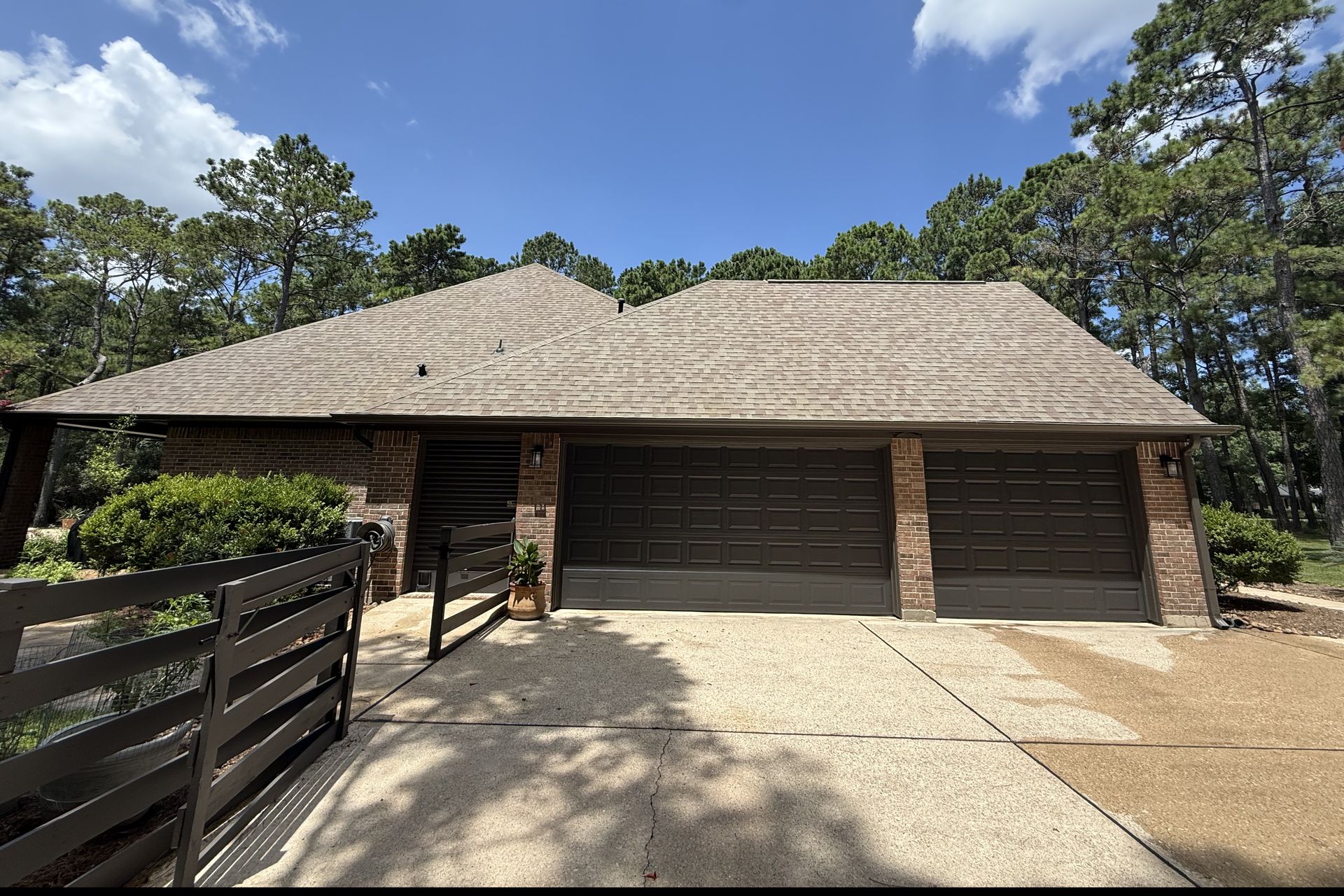
Look down almost any street in Cypress, Katy or Spring and you'll see them: dark streaks running down the north and shaded sides of roofs. Many homeowners assume it's dirt, shadows or a sign of a failing roof. Here's what's really going on and what to do about it.
What are the black streaks on my roof?
According to the Asphalt Roofing Manufacturers Association (ARMA), roof discoloration is mainly caused by algae, especially Gloeocapsa magma. The algae travel through the air, land on roofs and grow. As they grow, they produce a dark pigment that slowly turns light-colored shingles brown or black.
The streaks usually start near the top of the roof and run downhill, because rain carries the algae down the slope. They're often worst on the north side and under trees, where the roof stays damp longest.
A few other things can look similar:
- Moss: green, fuzzy clumps, usually in the shadiest, wettest spots
- Lichen: crusty gray-green spots that grip the shingles tightly
- Tree debris: pine needles and leaves that pile up in valleys and behind chimneys
A soft wash takes care of all of them at once.
Why black streaks are so common in Houston
Algae needs moisture, warmth and shade. Houston has all three, most of the year. Long humid summers, heavy dew, frequent rain and shade from pines and live oaks keep roofs damp, and the algae spreads from roof to roof on the wind.
Roofing manufacturer Malarkey notes that in very humid environments, streaks can show up in as few as three years after a new roof is installed. That's why even fairly new neighborhoods around Houston already have streaked roofs.
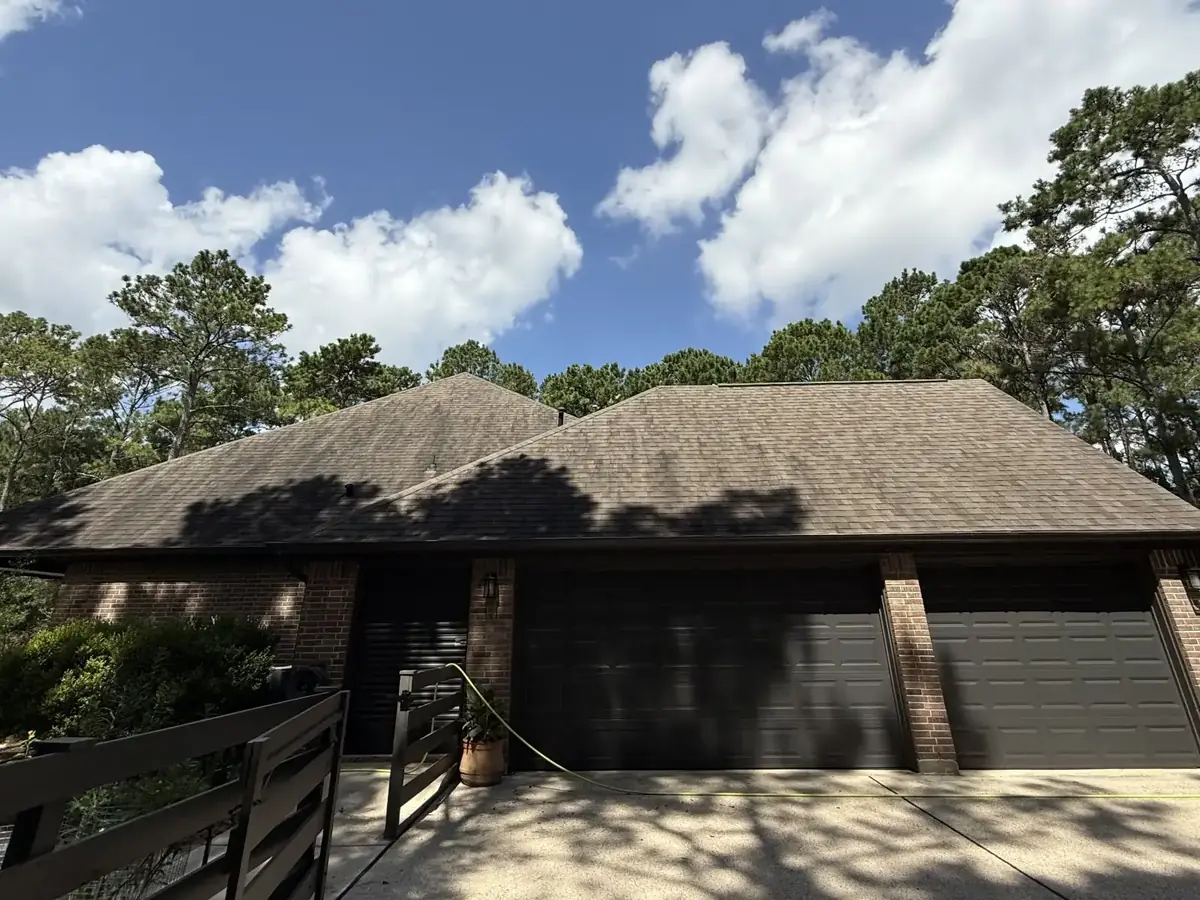 Before
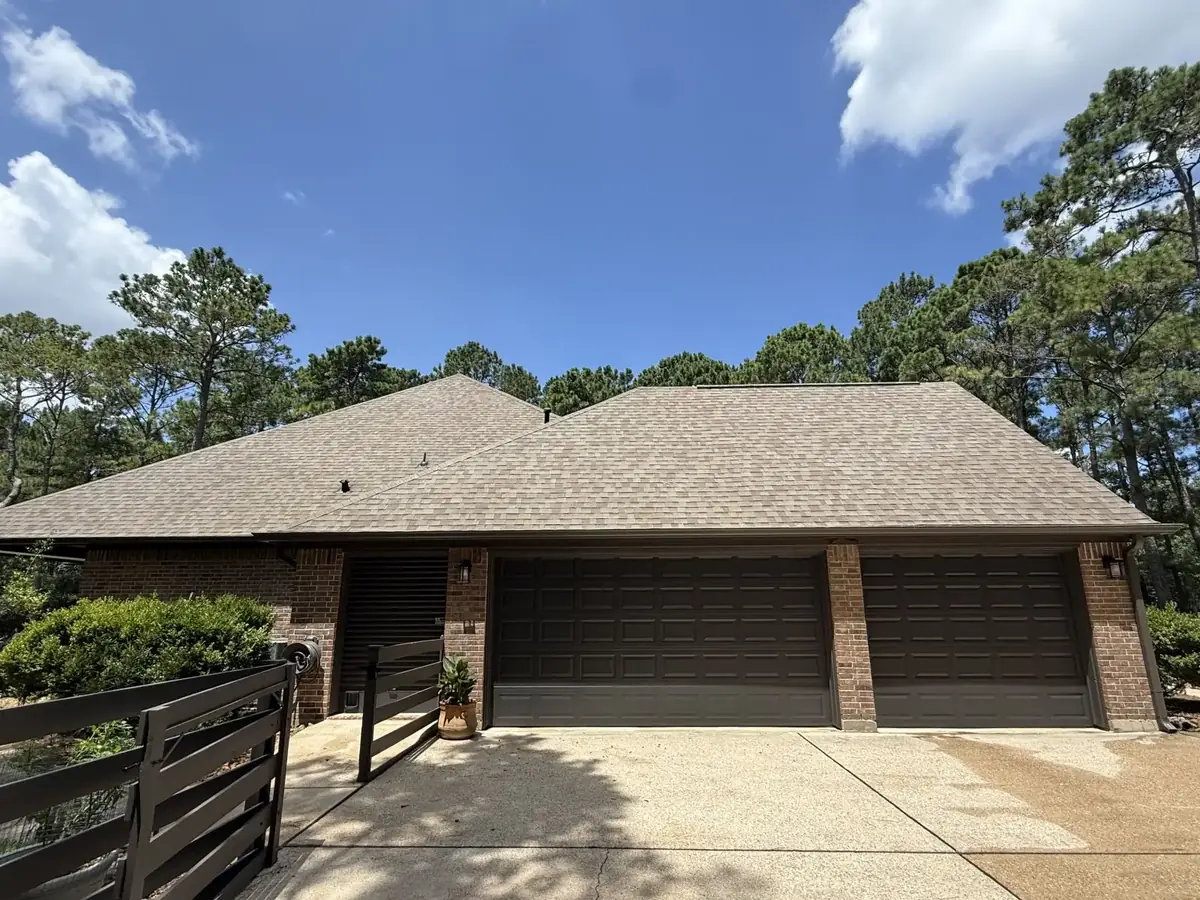 After
Do black streaks damage your roof?
At first, the streaks are mostly a cosmetic problem. But they're worth dealing with for a few reasons:
- Curb appeal and home value. A streaked roof makes the whole house look older than it is, and buyers notice. See Pressure Washing Before You Sell Your House.
- HOA letters. Many Houston-area HOAs flag roof streaks and mildew. See Got an HOA Letter About Mildew?
- Moss and lichen hold moisture. Where algae leads to moss and lichen, that growth keeps water against your shingles and can lift their edges over time.
- Heat. Dark streaks absorb more sun than clean, light-colored shingles.
The streaks don't mean your roof is leaking. But if we see damaged, lifted or missing shingles while we work, we'll let you know.
Why you should never pressure wash a roof
This is the most important part. ARMA states plainly: "DO NOT use a power washer" to clean algae from an asphalt roof, and also warns against brushes and brooms. High pressure and scrubbing knock off the protective granules that shield your shingles from the sun. Once those granules are gone, they don't come back.
Pressure washing a roof can:
- Strip granules and shorten the life of your shingles
- Crack clay and concrete tile
- Drive water up under shingles and flashing
- Leave the algae's roots behind, so the streaks return quickly
- Create problems with your shingle manufacturer's warranty
If a company offers to pressure wash your roof, that's a red flag. More on that in How to Choose a Pressure Washing Company in Houston.
How a roof soft wash works
ARMA's recommended approach is a diluted sodium hypochlorite solution, left on the roof for a short time and then rinsed gently. A professional roof soft wash is built on the same idea:
- Protect the property. We wet down plants and landscaping before we start.
- Apply the solution at low pressure. It's sprayed on gently from the ground or the roof, never blasted.
- Let it work. The solution kills the algae, moss and lichen at the root.
- Rinse gently. Dead growth rinses off, and some of the remaining stain keeps fading over the next few rains.
- Clean up. We rinse plants again and clear debris from valleys and the ground.
Soft washing works on asphalt shingle, clay and concrete tile, and metal roofs. Our roof cleaning starts at $600, and your exact price comes with a free quote. See real results on our roof cleaning page.
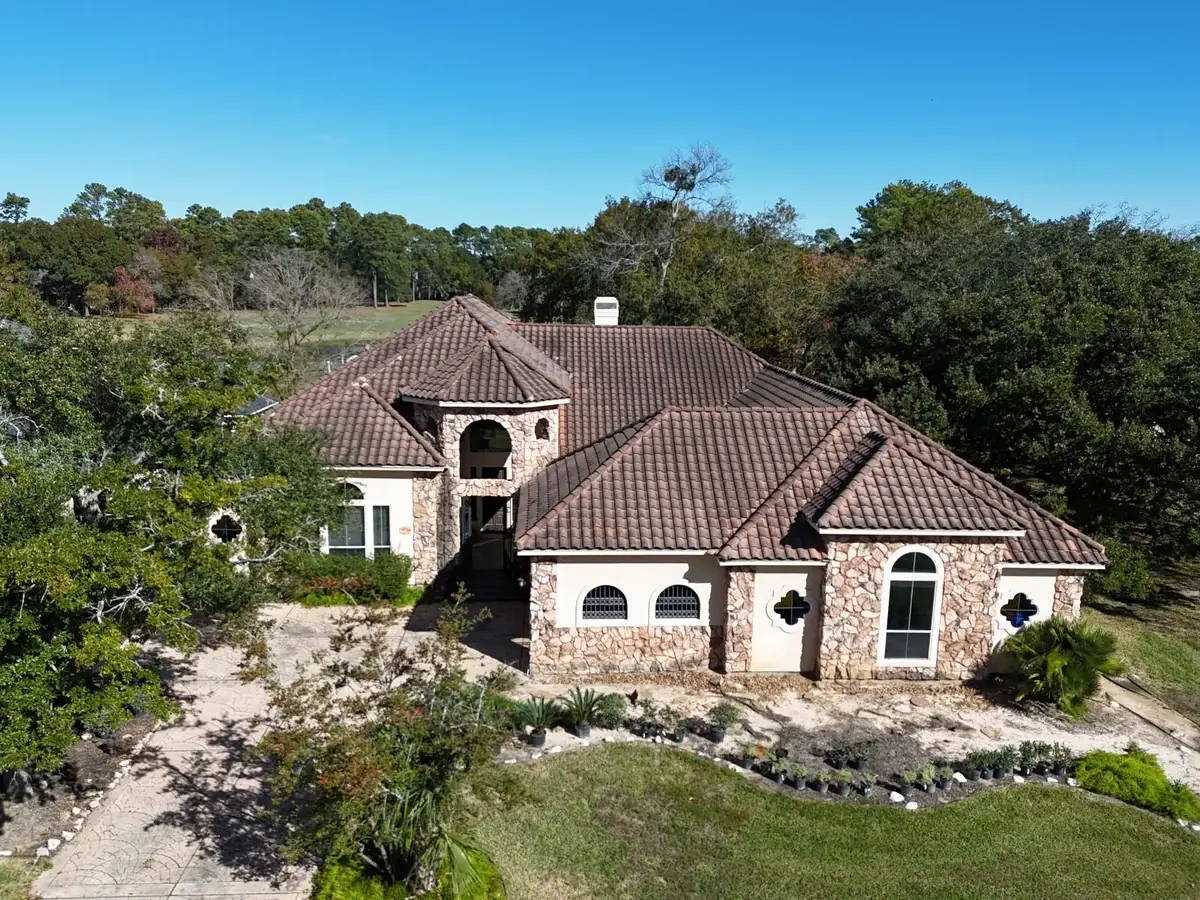 Before
 After
How to keep the streaks from coming back
Because the algae spreads on the wind, no cleaning lasts forever in Houston. These steps help stretch the time between cleanings:
- Trim overhanging branches so more sun reaches the roof and it dries faster.
- Keep gutters and valleys clear so water and debris don't sit on the shingles.
- Choose algae-resistant shingles when you replace your roof. Many manufacturers blend copper-coated granules into their shingles to slow algae growth.
- Schedule a soft wash every few years, or as soon as streaks are visible from the street.
Common questions
Usually not. The black streaks on most Houston roofs are an algae called Gloeocapsa magma. Moss and lichen can grow alongside it in shady spots, and a roof soft wash removes all three.
No. The algae is alive and attached to the shingles, and rain actually helps it spread down the roof. It has to be killed with a cleaning solution before it will rinse away.
No. The Asphalt Roofing Manufacturers Association warns against using a power washer on asphalt shingles because it strips the protective granules. High pressure can also crack tile. Use a low-pressure soft wash instead.
It varies with shade and how close the home is to trees and water, but most Houston roofs stay clean for a few years. Shaded roofs may need it sooner.
Our roof cleaning starts at $600. Price depends on the roof's size, pitch, material and how much growth there is. Every quote is free. Call or text (713) 828-4685.
Yes, when it's done correctly. We wet down landscaping before we start and rinse it again when we finish.
Want it done right?
Get a free quote from Naquin Power Washing LLC. $2M insured, 100% satisfaction guaranteed, and free rescheduling for rain.
Get a free quote →