

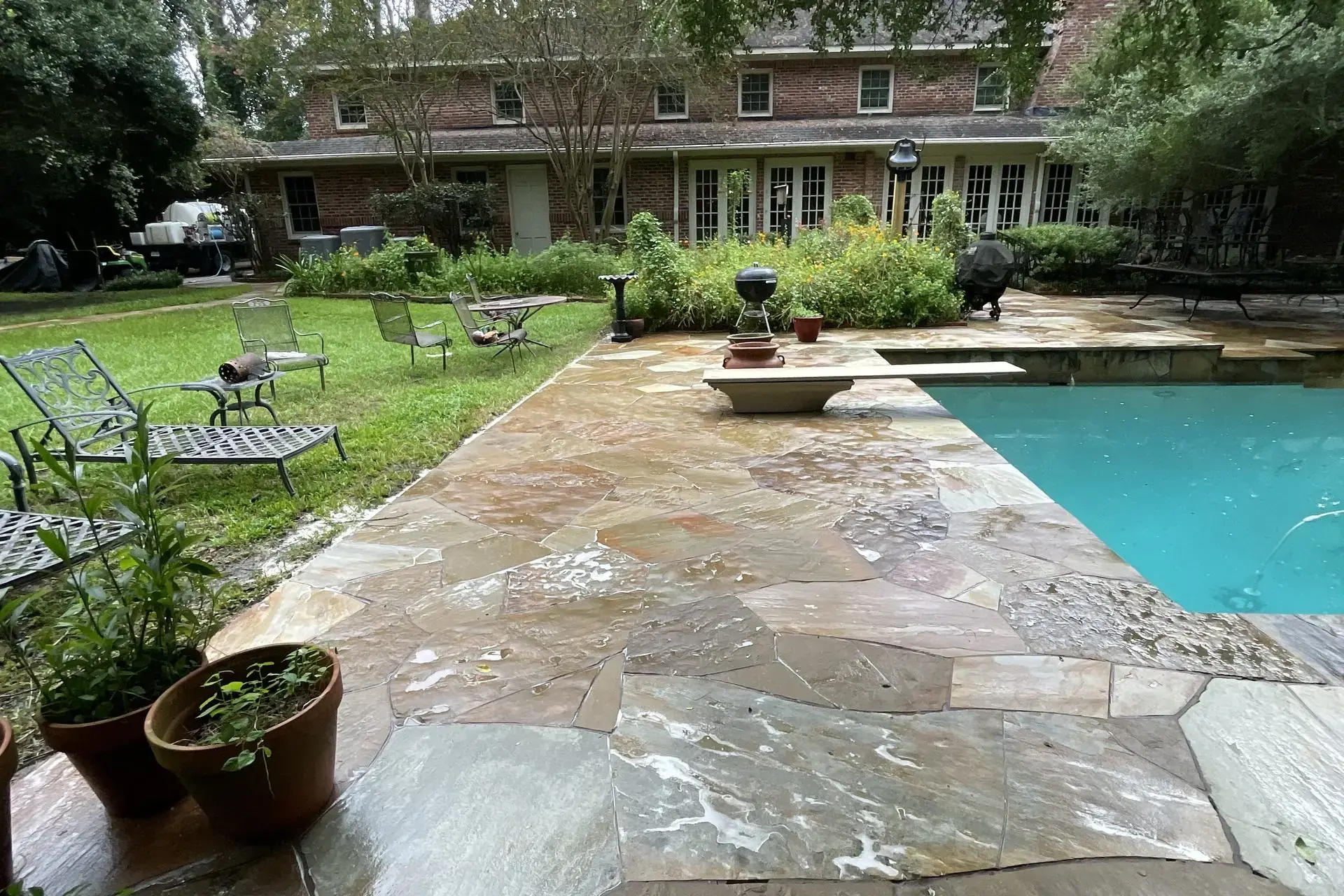
Patios & pools · October 2026
Short answer: every patio surface needs a different approach. Concrete pavers can take moderate pressure with a wide spray held at a low angle so the joint sand stays put. Flagstone, travertine and cool decking need low pressure and the right cleaner. Never use strong acids on natural stone, and never blast cool decking with a narrow, high-pressure stream.
Houston patios and pool decks stay damp and shaded, so algae and mildew grow fast and make them slippery. Cleaning them is about safety as much as looks. But these surfaces are easier to damage than a concrete driveway. Here's how to clean each one without causing problems.
How to clean each patio and pool deck surface
| Surface | Approach | Watch out for |
|---|---|---|
| Brushed concrete | Surface cleaner, standard pressure | Stripes from a handheld wand |
| Concrete pavers | Moderate pressure, wide fan spray at a low angle | Blowing sand out of the joints |
| Flagstone & slate | Low pressure plus a cleaner | Flaking stone, washed-out mortar joints |
| Travertine & limestone | Low pressure, stone-safe cleaner | Acids etch calcium-based stone |
| Cool decking | Low pressure plus a cleaner | High pressure can gouge the textured coating |
| Brick patios & steps | Low pressure plus a cleaner | Eroding mortar joints |
The common thread: on anything softer than plain concrete, let the cleaning solution do the work and use pressure only to rinse. It's the same principle behind soft washing a house.
Cleaning concrete pavers without losing the joint sand
Pavers are held in place by the sand packed between them. Blast that sand out and the pavers can shift, weeds move in, and ants take over the gaps.
Industry guidance from the Concrete Masonry & Hardscapes Association (CMHA) recommends using a wide nozzle at a low angle to reduce the risk of dislodging joint sand. Paver maker Unilock similarly recommends a fan-pattern spray rather than a concentrated stream, with the spray angled so it doesn't blow sand out of the joints.
Even with good technique, some joints may look low after cleaning, especially if they were already worn. Unilock's advice is to let the area dry completely, then sweep sand back into the gaps. If your pavers have polymeric sand, which hardens when wet, follow the product's label for misting and curing.
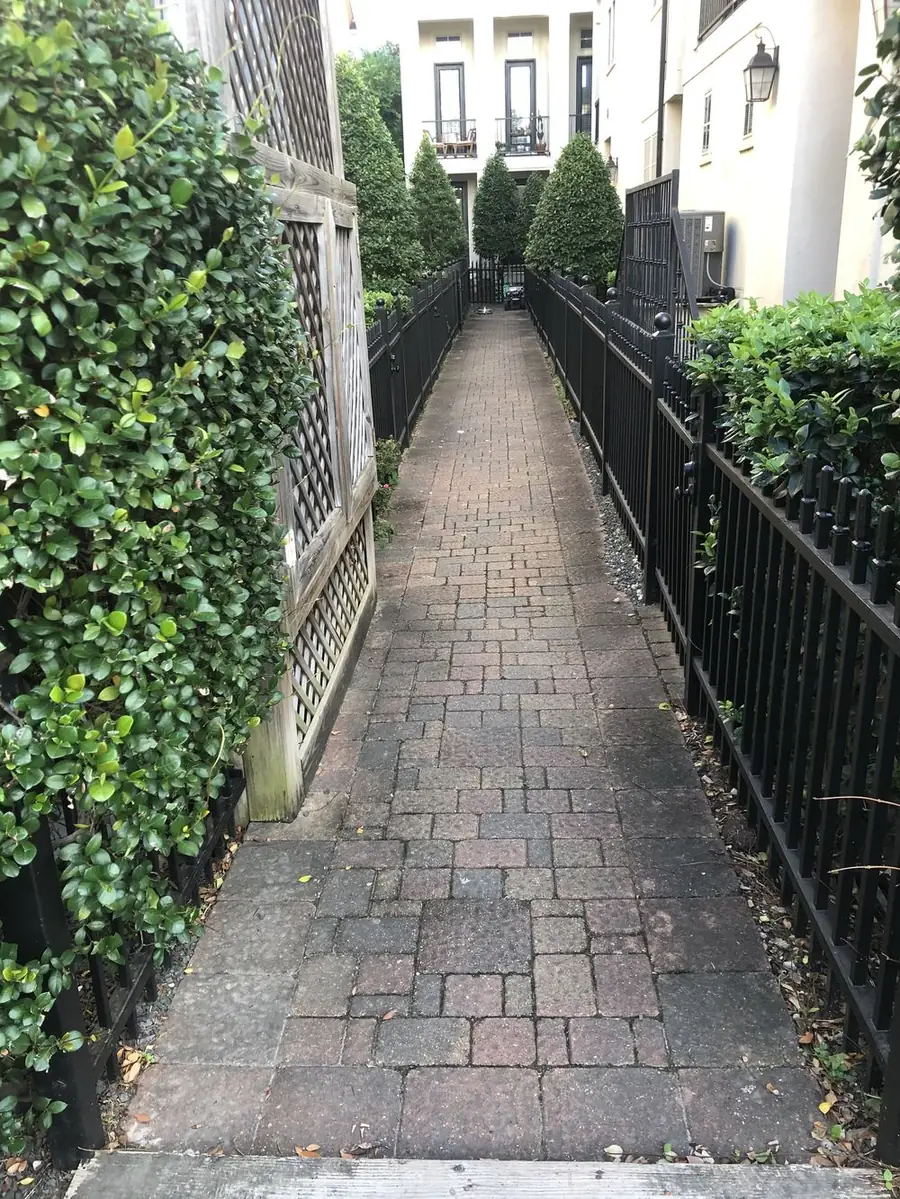 Before
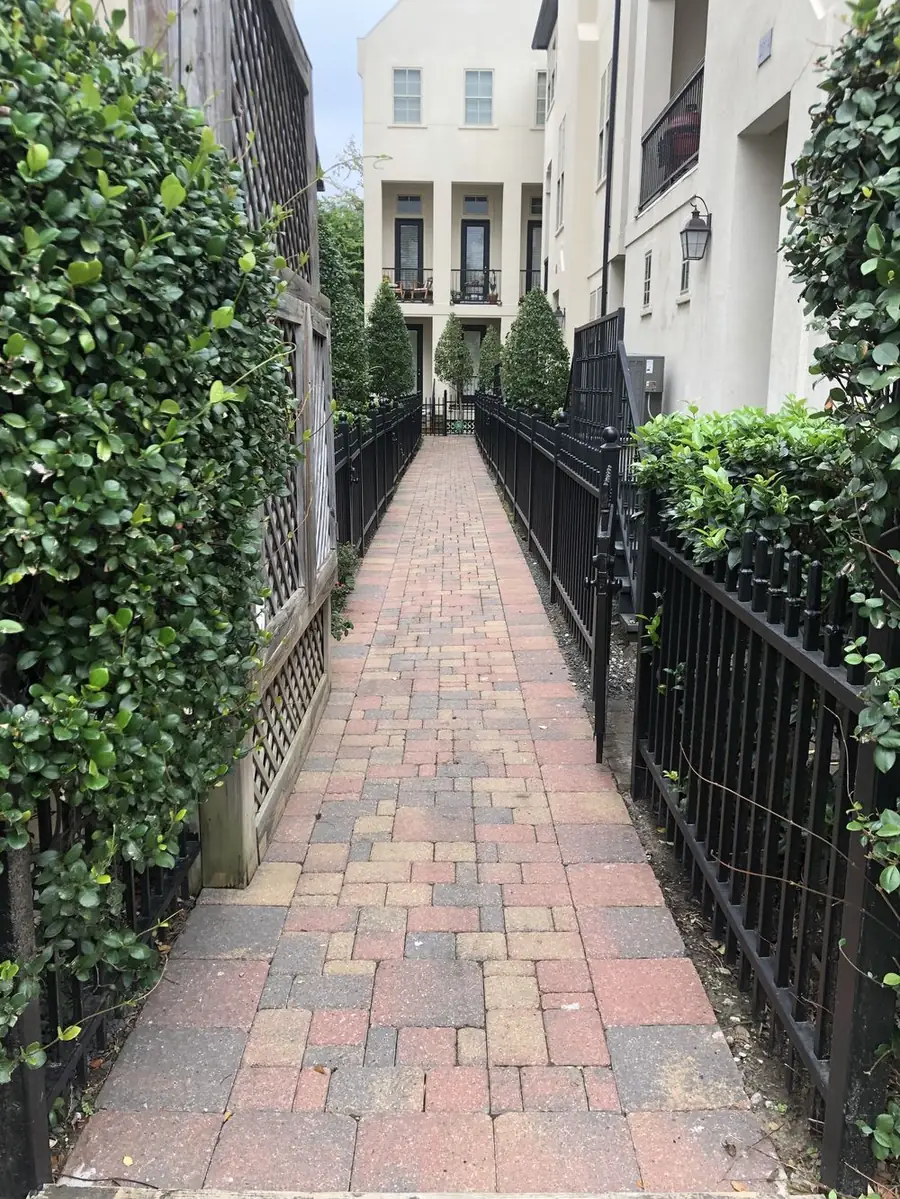 After
Flagstone, travertine and natural stone
Natural stone is beautiful and fragile. Flagstone and slate can flake or spall under high pressure, and the mortar between flagstones can wash out. Travertine and limestone are calcium-based, so acidic cleaners can etch and dull them. That includes many rust removers and household acids.
The safe approach for natural stone:
- Low pressure, with a cleaner suited to the stone to kill algae and mildew
- No strong acids on travertine, limestone or marble
- Extra care around pool coping and steps, where stone edges chip easily
- A thorough rinse, especially near the pool
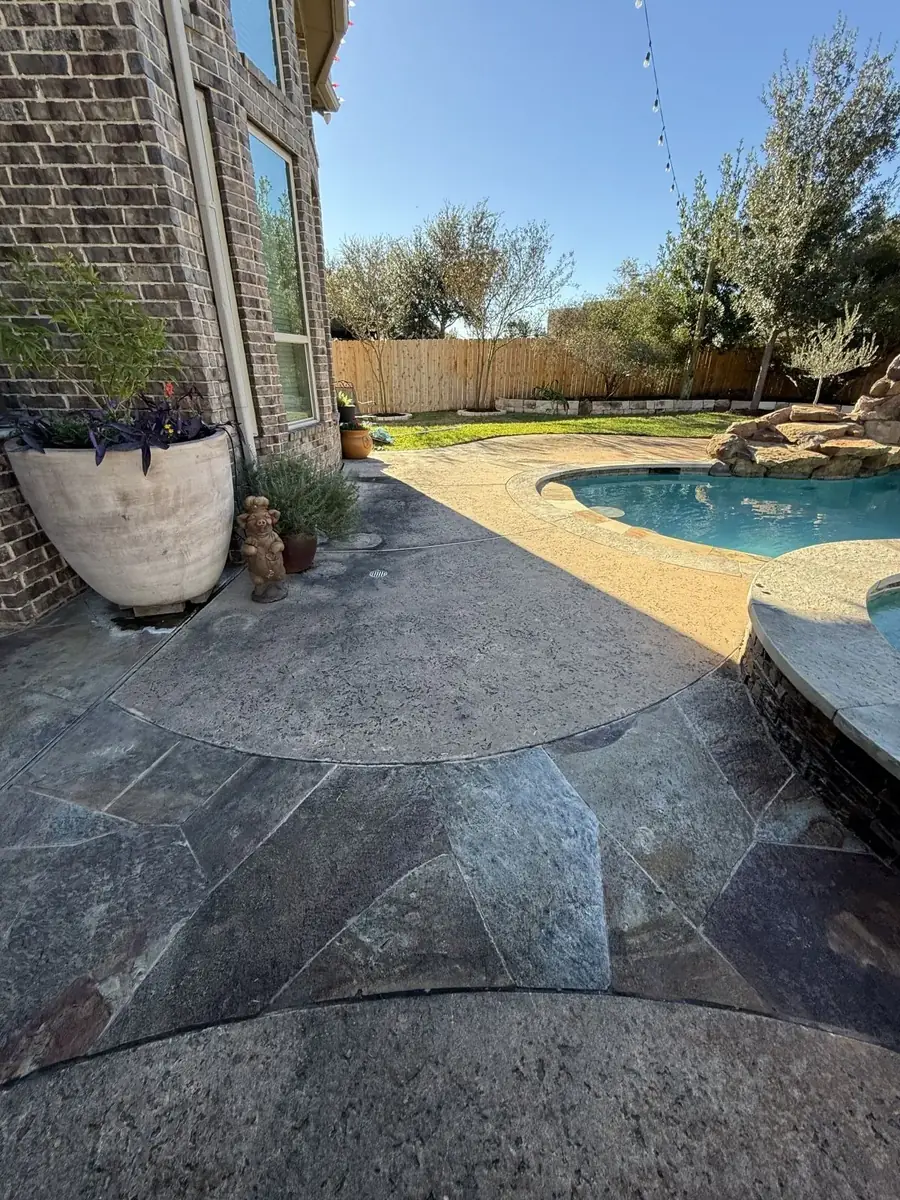 Before
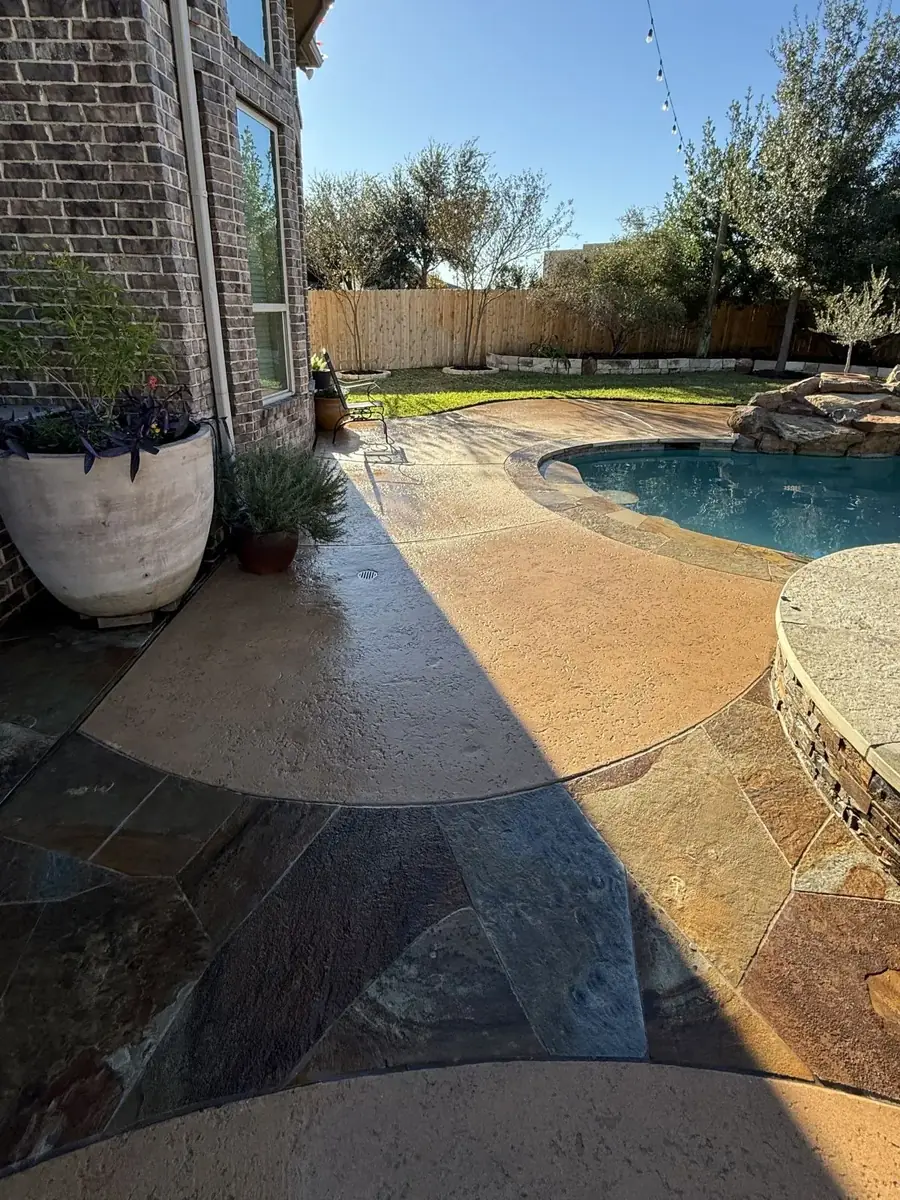 After
Cool decking and textured pool decks
Many Houston pools are surrounded by cool decking, a textured, light-colored coating that stays cooler underfoot. It's tough enough for bare feet, but a narrow, high-pressure stream can gouge the texture or lift the coating at weak spots. Cool decking cleans up well with a cleaner that breaks down algae and mildew, followed by a lower-pressure rinse.
If your cool deck is already peeling, cracked or faded, cleaning will make it look much better, but it won't repair it. We'll point out those areas when we quote.
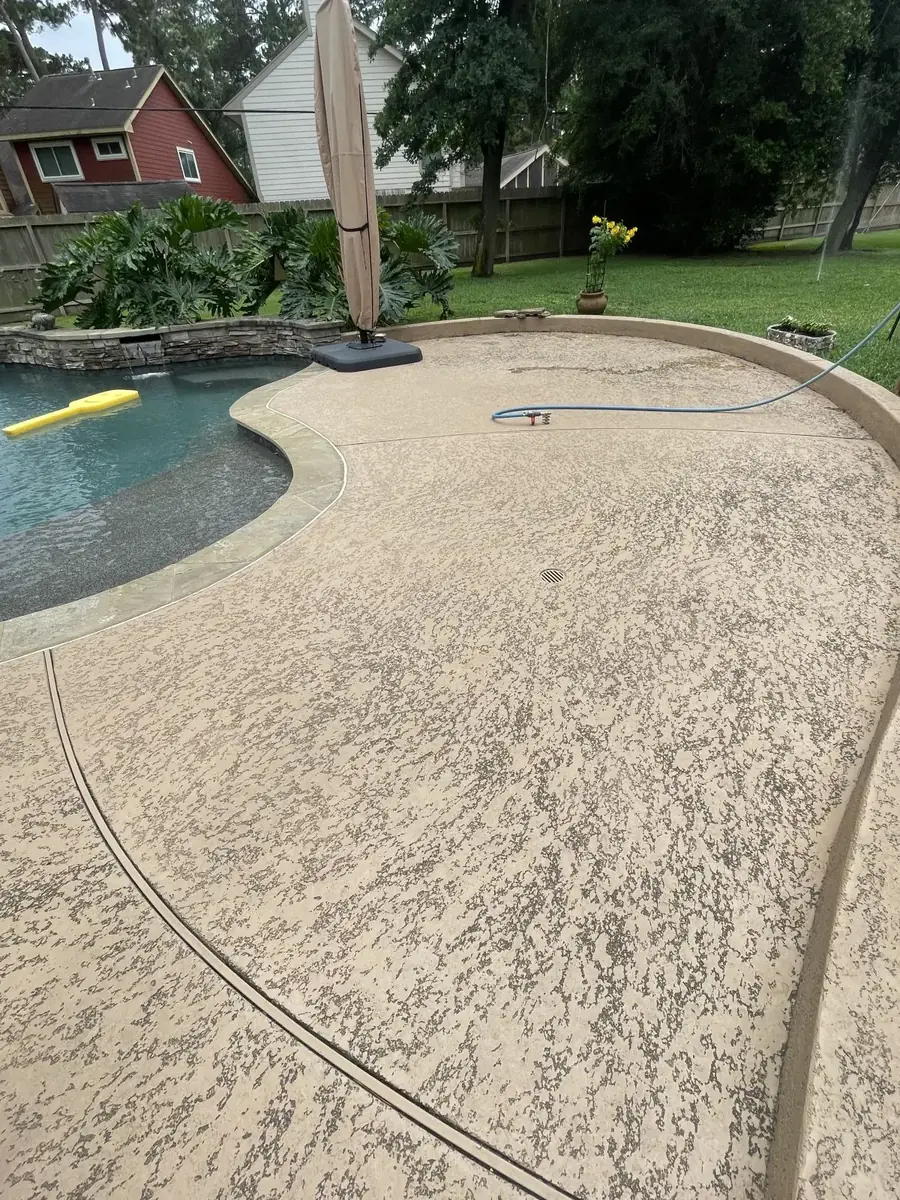 Before
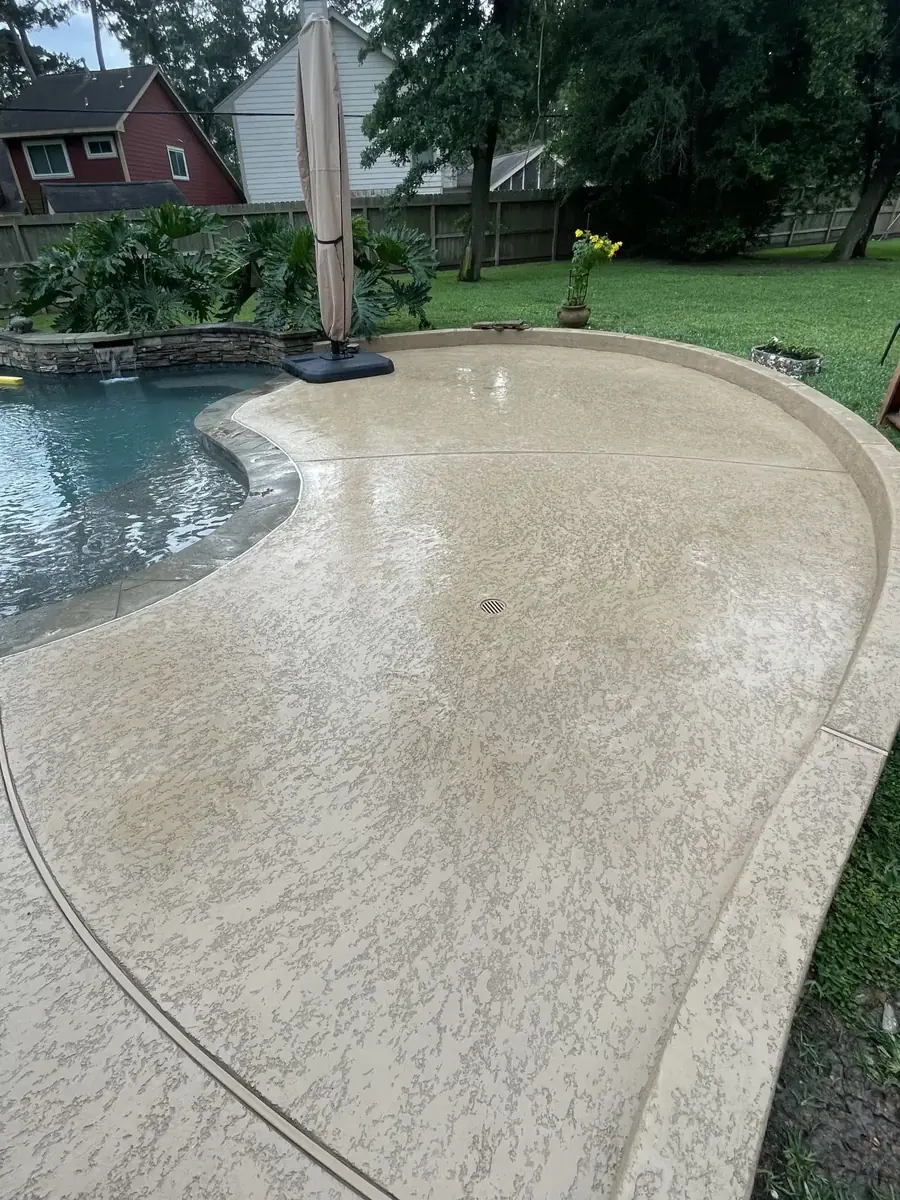 After
What's that white haze on my pavers?
A chalky white film on pavers or concrete is usually efflorescence: salts carried to the surface by moisture. According to the CMHA, efflorescence doesn't affect the structural performance or durability of concrete pavers. It's cosmetic. Pressure washing alone usually doesn't remove it. It takes an efflorescence cleaner, applied at low pressure and rinsed with water.
Should you seal pavers after cleaning?
Sealing is optional. It can deepen the color, make stains easier to clean and help lock in joint sand. If you plan to seal:
- Clean first, including any efflorescence and stains. Sealer locks in whatever is underneath.
- Let it dry completely. CMHA guidance calls for at least 24 hours with no moisture before sealing.
- Re-sand low joints before sealing.
- Plan to reseal after a few years of wear and weather.
How often to clean patios and pool decks in Houston
Most patios and pool decks need cleaning about once a year. Shaded decks and those under trees may need it twice. The best time is late spring, before pool season. See The Best Time of Year to Pressure Wash in Houston. Our patio and pool deck cleaning starts at $150, and we move patio furniture for you. See our pool deck cleaning page for more Houston before and afters.
Common questions
Yes, with care. Use a wide fan spray held at a low angle so the joint sand stays in place. If joints look low afterward, let the pavers dry and sweep sand back in.
A narrow, high-pressure stream can break up and wash out polymeric sand. A wide spray at a low angle helps protect it. If it does wash out, it can be replaced by following the product's instructions.
With low pressure and a cleaner that kills algae and mildew, then a gentle rinse. High pressure can flake flagstone and wash out the mortar joints.
No. Travertine is a calcium-based stone, and acids can etch and dull it. Use a cleaner made for natural stone.
Usually efflorescence, a salt deposit carried up by moisture. It's cosmetic and doesn't weaken the pavers. It needs an efflorescence cleaner rather than just pressure.
Yes. Algae is what makes damp decks slick. Killing and removing it is one of the best things you can do for pool deck safety.
Want it done right?
Get a free quote from Naquin Power Washing LLC. $2M insured, 100% satisfaction guaranteed, and free rescheduling for rain.
Get a free quote →